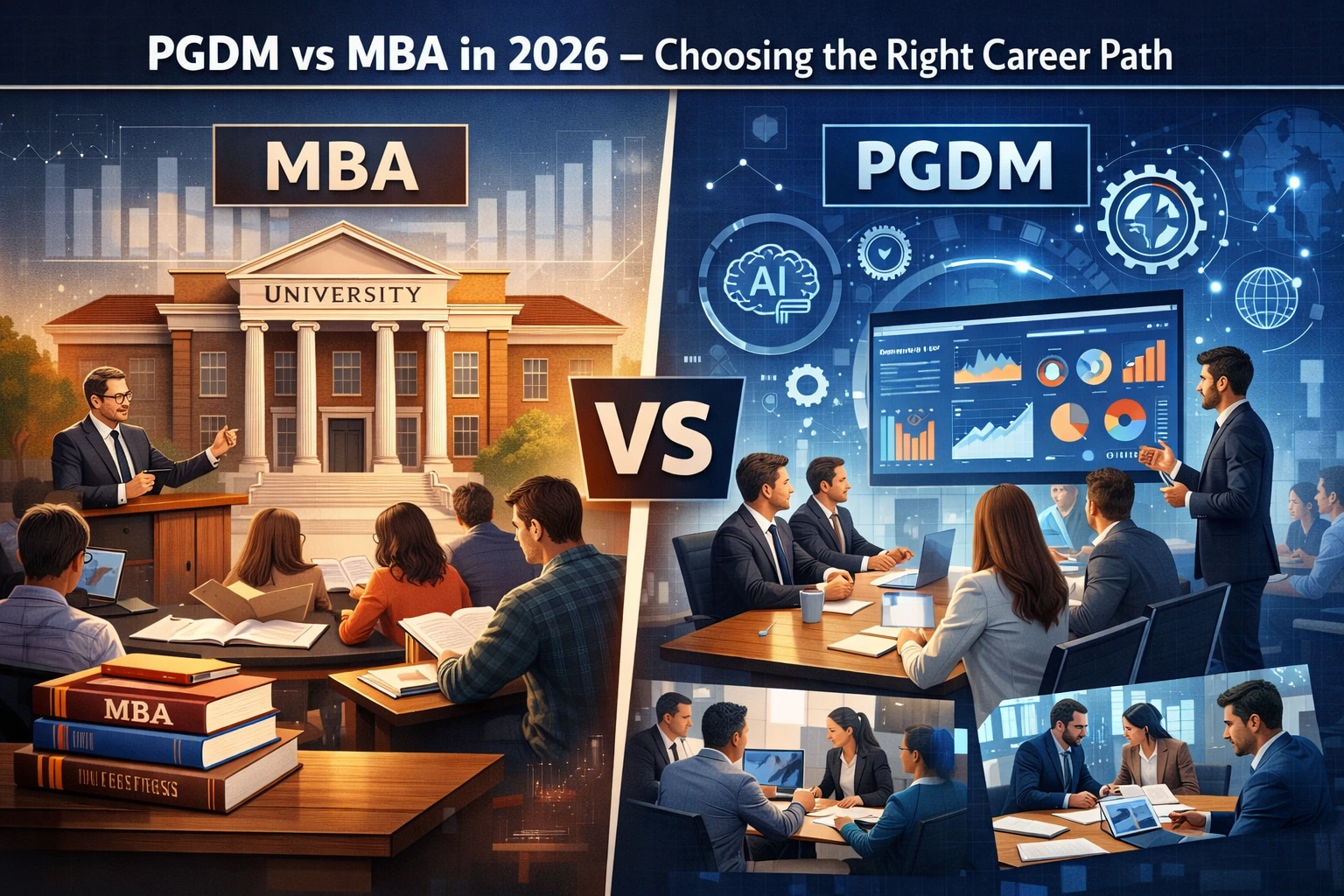
In 2026, there is a need to make wise decisions regarding the choice of MBA vs PGDM instead of making them based on conventional choices. The two programs have some useful knowledge to offer, and the fast-changing business world requires one to make a decision based on the relevant skills and career goals as opposed to legacy and familiarity.
From Degrees to Skills: Embracing Capability-Based Growth
Nowadays, employers are more concerned with the abilities of the candidates than their degrees. India’s PGDM programs are industry-driven and prefer practical skills and integration of technology. The PGDM vs MBA debate has taken a new dimension to equip students with data-driven, AI-led business models.
Why Students Are Exploring New Questions in 2026?
The nature of business is changing. The questions posed by the students relate to the relevance of the curriculum, agility, practical experiences, and placement results. Contrary to the older management courses, PGDM courses often refresh the materials to incorporate analytics, digital marketing, and new technologies, bringing learning in line with real-world needs.
Learning Designed for the Corporate World
Experiential learning, through live projects, internships, and industry partnerships, is the focus in institutes such as Welingkar. This strategy makes sure that the education acquired in PGDM programs in India is corporate-challenged so that the graduates are ready to make immediate impacts.
Curriculum Flexibility: The Unsung Game-Changer
PGDM programs are dynamic in their curriculum in the sense that they are responsive to the trends in the industry. This aspect is vital in the years to come because industries are evolving with the impact of AI and data analytics, and PGDM courses have an advantage over traditional MBA programs, whose syllabi are updated at a relatively slower pace.
The best alternative between an MBA and PGDM will be based on personal career objectives and readiness to adapt to changing business conditions. The choice of the programs should be based on the level of industry preparedness, relevance of the curriculum, and placement support, thus providing attractive career opportunities.
FAQs
The value of the programs is not based on the traditional brand perceptions but rather on the industry relevance and up-to-date skills.
Regular changes to the curriculum, as well as industry and technology orientations, make PGDM programs in India more corporate-oriented.
Students who have enrolled in courses that integrate AI, data analytics, and digital skills are better prepared for future employment.