Artificial Intelligence (AI) has become one of the most influential technologies shaping modern business. From automation and analytics to customers’ interactions and strategic decisions, AI continues to redefine how organizations operate. As industries transition towards digitally enabled structures, managers must understand the scope and potential of AI to stay competitive. Business schools and management institutes, including some of the best PGDM colleges in India, are progressively incorporating AI-centric learning into their curriculum. This ensures that future managers can navigate technology-driven business landscapes effectively.
Key Areas Where AI Is Transforming Modern Business Management
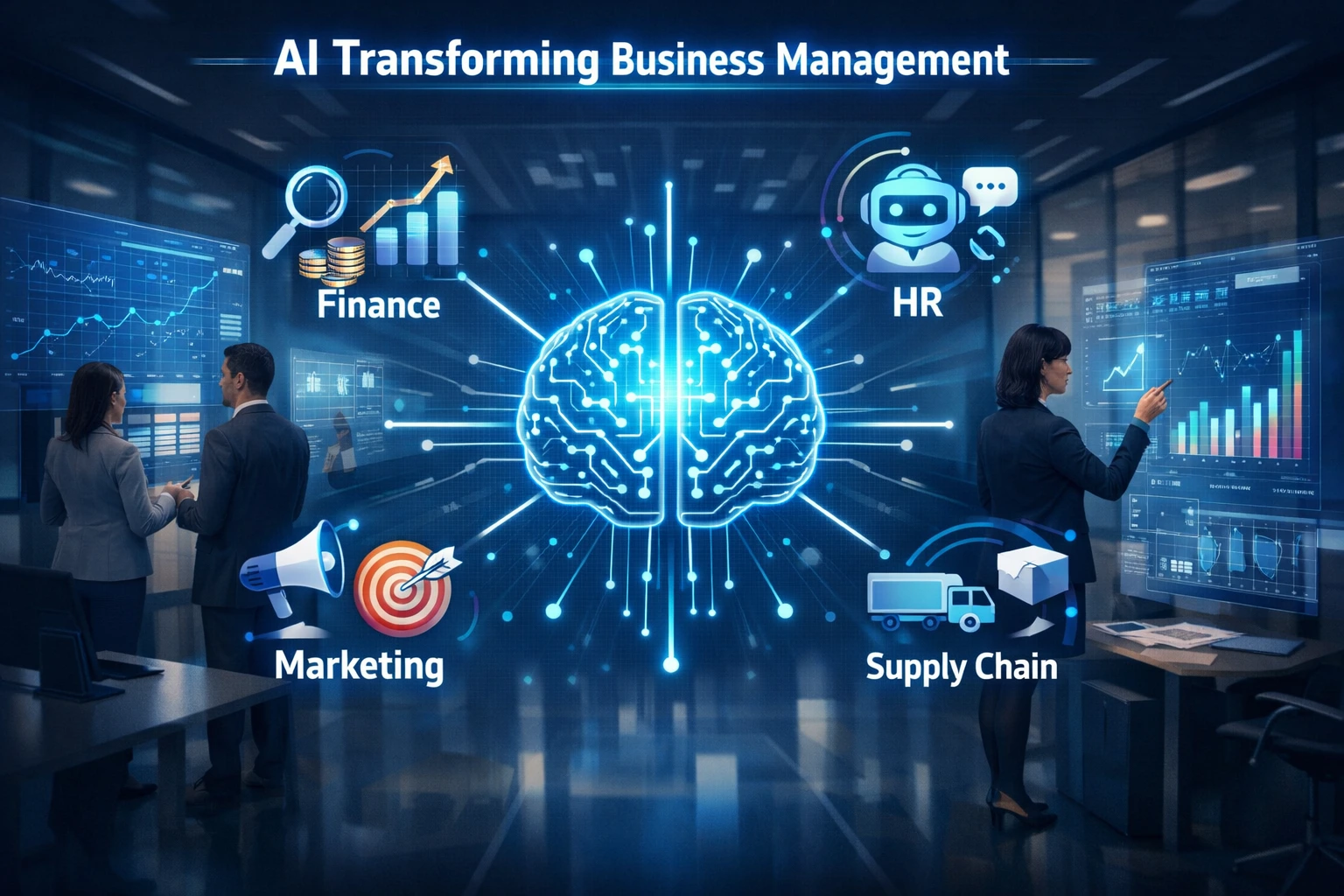
AI has a transformational impact across multiple organizational functions. Its applications extend far beyond automation and play a pivotal role in shaping strategic decisions.
1. Decision-Making Powered by Predictive Analytics
AI systems analyze historic and real-time data to predict outcomes with greater accuracy. Predictive analytics supports decision-making in finance, marketing, supply chains, and risk management. Organizations use AI-driven insights to identify trends, evaluate performance metrics and improve operational efficiency.
2. Automated Process Optimization
Robotic Process Automation (RPA) enables organizations to automate repetitive back-office tasks, such as payroll processing, invoice verification, and customer query sorting. The result reduces human error and allows employees to dedicate more time to strategic responsibilities.
3. Customer Relationship Management (CRM)
AI-powered CRM tools help businesses track customers’ behaviours, segment audiences, and personalize communication. Chatbots, recommendation engines, and sentiment analysis systems enhance customer satisfaction and retention. Businesses that implement these tools gain a competitive advantage in service delivery.
4. Supply Chain and Inventory Management
AI solutions optimize procurement, inventory forecasting, and logistics planning. Real-time tracking and predictive algorithms reduce delays, prevent stock-outs and improve warehouse operations.
5. Human Resource Management
AI supports HR departments by improving talent acquisition, employee evaluations, and workforce planning. Resume screening tools, performance monitoring systems and AI-based training assessments ensure more objective decision-making in HR processes.
6. Marketing and Consumer Insights
Marketing teams use AI for targeted campaigns, lead scoring, market segmentation and content personalization. Consumer data is analyzed to understand preferences, behaviours, and purchasing patterns, which enables businesses to tailor their strategies.
The Role of Business Education in Bridging the Gap
As AI reshapes industries, the demand for managers equipped with technological expertise continues to grow. Modern PGDM courses focus on helping students understand AI’s impact on managerial decisions and business functions. Leading business schools have integrated AI-focused modules to strengthen analytical and technological understanding.
PGDM colleges in Mumbai and Bengaluru often collaborate with industry partners to provide hands-on learning through simulations, workshops, and case studies. This ensures students are exposed to:
- Data analytics tools
- Machine learning fundamentals
- AI-driven marketing and finance applications
- Business intelligence platforms
Such training helps future managers become proficient at using AI tools and aligning them with organizational strategies.
How Businesses and Managers Can Evolve for an AI-First Generation?
AI adoption requires both structural and cultural transformation. Managers must cultivate the right approach to integrate AI into business practices successfully.
1. Building Strong Technological Understanding
Managers must stay updated with digital trends. Understanding the capabilities and limitations of AI tools ensures more accurate decision-making and reduces dependency on external specialists.
2. Using Data to Drive Smarter Decisions
Organizations generate large amounts of data. Managers must learn how to interpret AI-generated information to enhance strategic planning, budgeting, and forecasting.
3. Culture of Innovation
As automation replaces routine processes, creative and problem-solving skills become increasingly important. A culture that encourages experimentation helps businesses stay ahead technologically.
4. Commitment to Ethical and Responsible AI Practices
The rise of AI poses ethical concerns, such as data privacy, algorithmic bias, and transparency. Managers must adopt responsible AI practices and comply with regulatory frameworks to maintain trust and credibility.
5. Continuous Improvement Through Skill Enhancement
AI evolves rapidly. Regular training ensures managers and employees can use advanced tools. Many organizations invest in PGDM courses, certifications, and AI workshops to ensure worker readiness.
6. Collaboration Between Humans and AI
AI complements managerial skills, but it cannot replace leadership, empathy or human judgment. Managers should focus on combining AI capabilities with human intelligence to achieve balanced organizational growth.
The Impact and Significance of Artificial Intelligence
Artificial Intelligence continues to transform business operations, strategic planning and workforce productivity. Its roles in decision-making, automation, customer engagement, and risk management make it indispensable in modern corporate settings. As organizations move towards an AI-centric future, management professionals trained through sector-specific PGDM courses will hold a strategic edge. Whether studying at the best PGDM college in India or at institutions offering learners the ability to integrate AI into business functions responsibly and effectively. With the right combination of technological proficiency, analytical skills, and ethical awareness, managers can confidently lead businesses into an increasingly intelligent digital era.
FAQs
AI supports decision-making, automation, customer engagement and performance tracking across departments.
It enhances efficiency, enables data-driven decision-making, and improves productivity in technology-driven workplaces.
Yes, many PGDM courses include analytics, AI fundamentals and business intelligence modules.
AI enhances managerial abilities but cannot replace human judgment, leadership or interpersonal skills.
Institutions offering PGDM colleges in Mumbai and Bengaluru are known for industry-integrated AI learning exposure.