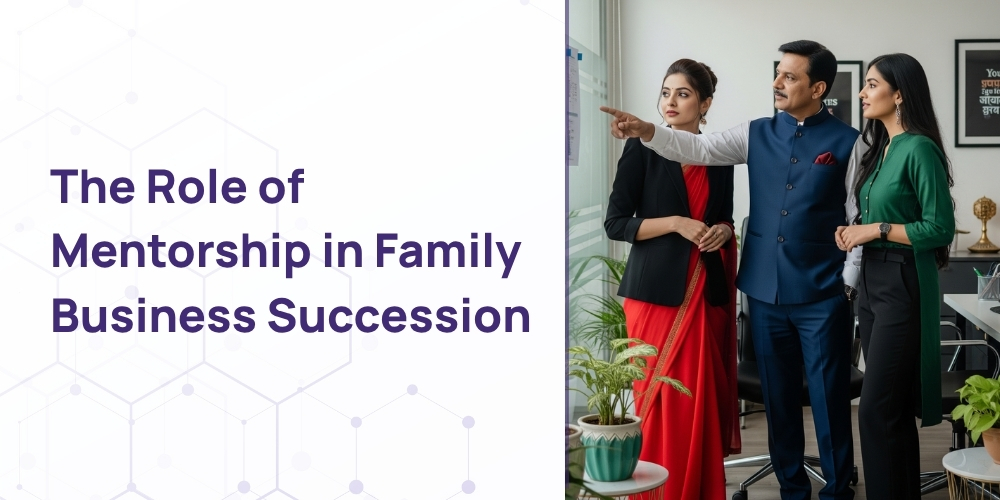
In a family business, the transfer of ownership is easy but the transfer of leadership?
Not so much.
Succession planning often focuses on who takes the title but rarely on how that person earns the trust, knowledge, and wisdom needed to lead. That’s where mentorship becomes the secret weapon. More than just guidance, effective mentoring builds bridges between generations, ensures leadership continuity, and helps the next generation step up, not just step in.
And if you’re in the early succession planning phase, mentorship isn’t optional—it’s urgent. Without it, a smooth business transition is nearly impossible, especially when moving from the 1st generation of founders to the 2nd generation of successors, or preparing the 3rd generation for future leadership.
Here’s how mentorship can be the game-changer in ensuring smooth and successful family business succession.
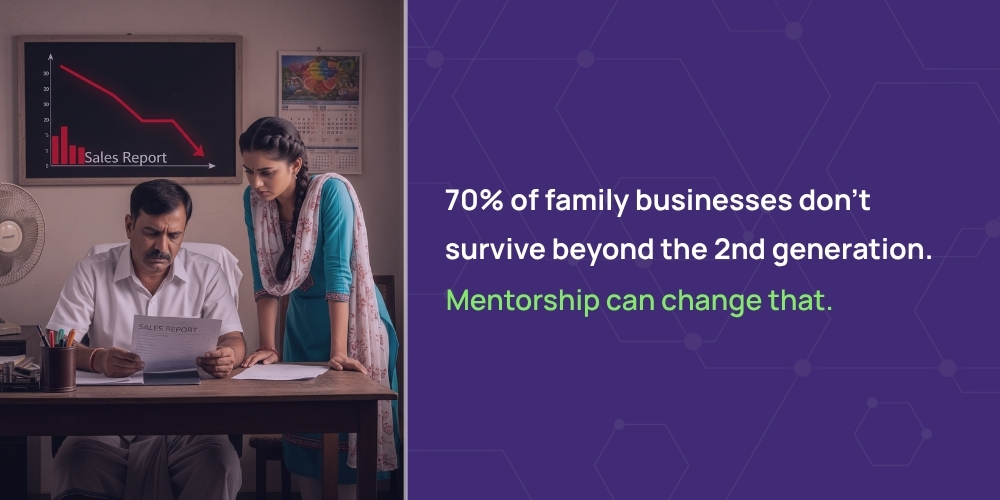
According to studies, over 70% of family businesses do not survive beyond the 2nd generation. And it’s not because of market failure, it’s due to mismanaged transitions and unresolved interpersonal dynamics.
Mentorship provides a structured, supportive pathway for successors to:
It acts as a safe space for transformation where future leaders can experiment, make mistakes, and grow under the watchful eye of those who’ve built the business.
Unlike corporate settings, mentoring in family-run enterprises must factor in personal roles, emotional baggage, and shared legacies.
Let’s break down the mentorship dynamics by role:
Founders must often learn to let go - delegation, trust, and modern leadership philosophies don’t come naturally.
Mentorship here is two-way:
This group is often in charge of actively running operations while still managing founder relationships.
Mentorship helps them:
For those growing up around the business but not yet involved, mentorship reconnects them through:
The mentoring process in a family business succession needs a strategy, not just coffee chats or casual advice.
Here’s how to set it up:
What should the mentee walk away with? Skills? Exposure? Confidence? Make the goals transparent from the start.
Sometimes a professional CEO or board advisor might be a better mentor than the parent. Don’t confuse blood with fit.
Psychometric assessments, feedback tools, and 360-degree reviews help identify where the mentee truly needs growth.
Set fixed check-ins, goal reviews, and feedback loops. This builds accountability and shows that the mentoring is part of the succession roadmap, not just a support system.
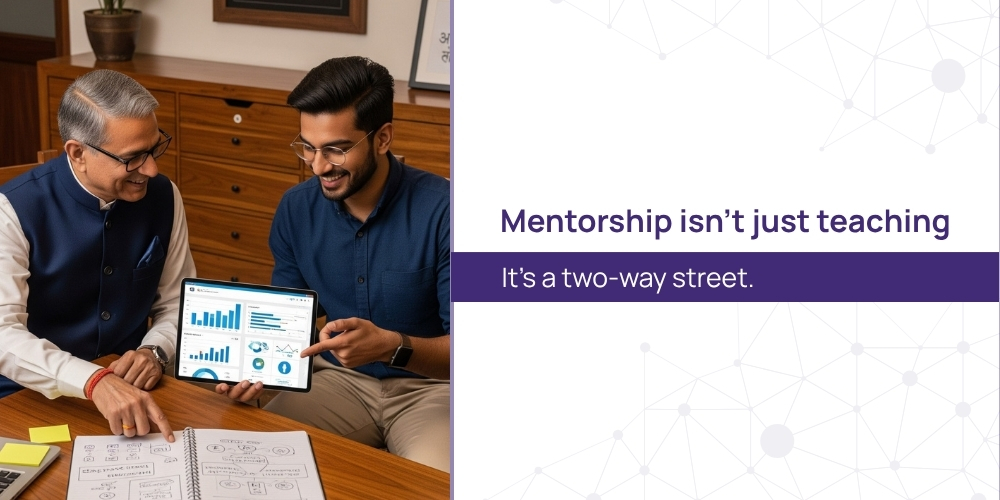
Being a mentor isn’t about having experience. It’s about knowing how to transfer it effectively and without ego.
Top traits to look for:
Founders, especially the 1st generation ones, often need coaching themselves to become effective mentors, especially if they’re still in the driver’s seat while trying to hand over the wheel.
Let’s not forget, mentoring is a two-way street.
The next-gen leader must be:
The best mentees actively seek out mentors across functions- operations, finance, branding - so their leadership becomes well-rounded and respected.
Here are some of the most effective practices that go beyond surface-level mentorship:
Have the mentee sit in on strategic meetings, vendor negotiations, and crisis situations. Real-time exposure teaches what textbooks can’t.
Let younger mentees teach senior members digital skills, new-age branding, or Gen Z customer insights. It builds mutual respect.
Involve mentees in new projects or pilot ventures. Give them skin in the game, and let them earn leadership through results.
Monthly or quarterly review sessions with the mentor help evaluate progress and course-correct early.
You can train someone to run operations. But it takes mentorship to instill values, vision, and cultural intuition.
Mentorship becomes the medium to:
And especially in multi-generational businesses, it’s the key to uniting the 1st generation, 2nd generation, and 3rd generation around a shared future.
In fact, many of the most successfully transitioned family businesses credit mentoring, not strategy as the cornerstone of that outcome.
If you're serious about succession planning in a family business, you need more than org charts and legal transfers.
You need mentoring.
It’s what turns a handover into a transformation. It prepares successors to lead, not just inherit. It helps founders evolve from controllers to coaches. And it ensures that the legacy continues with purpose, maturity, and resilience.
If you're building a future-ready family business, consider investing in structured mentorship and formal education programs like PGPEFMB at WeSchool, which bridges the gap between 1st, 2nd, and 3rd generation leaders through leadership training, real-world mentorship frameworks, and modern business thinking.